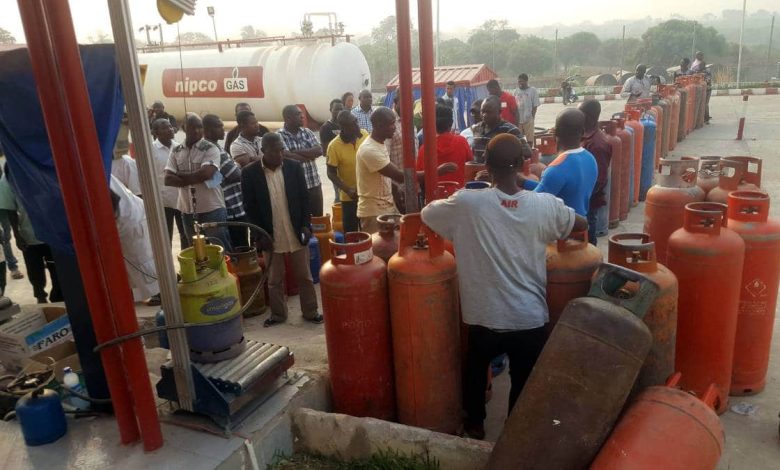
The price of refilling cooking gas in Nigeria has climbed to ₦1,180 per kilogram, leaving millions of households struggling with rising energy costs.
A visit to several retail points across the country shows that consumers are now paying almost double of what they did a year earlier, a development sellers blame on inflation, foreign exchange, and logistics burdens.

See the price of cooking gas below:
1kg – 1,180
3kg – 3,540
5kg – 5,900
10kg – 11,800
12kg – 14,160
12.5kg – 14,750
Major factors affecting cooking gas refill prices in Nigeria
The price of cooking gas is influenced by several critical supply-chain and economic realities:
1. Global LPG market cost Nigeria imports a significant amount of its Liquefied Petroleum Gas. When global LPG prices rise, domestic refill costs move up with it.
2. Foreign exchange pressure Volatility of the naira pushes the landing cost higher. Limited FX access affects the supply volume entering the market.
3. Transportation and haulage Most gas trucks run on diesel. Long travel distances from coastal import terminals to inland distributors increase delivery charges. Frequent road delays from bad highways add a hidden cost.
4. Taxes and local levies Multiple charges, such as road unions, state loading fees, depot levies, and safety compliance costs, influence retail price buildup.
5. Storage and handling infrastructure Lack of sufficient storage tanks in many parts of the country means costlier, more frequent supply trips.
6. Seasonal demand peaks Ember months’ cooking demand. Dry season events and ceremonies. Festival periods like Christmas, Sallah, and the New Year.
7. Security and logistics disruptions In regions affected by insecurity, deliveries attract higher risk allowances, which are factored into the price.
8. Inflation and cost of operations Maintenance of cylinders and regulators is more expensive.
Staff salaries, shop rent, and safety equipment cost more.
Weighing scale certification, firefighting tools, and surveillance for safety also add cost.
9. Market competition and locality advantage Local producers or retailers closer to supply sources can occasionally offer slightly lower prices than inland competitors.